CHRISTIAN

Friday, October 02, 2026

Did Scientists Just Create Life from Nonliving Chemicals?


Did Scientists Just Create Life from Nonliving Chemicals?

In 2010, headlines declared that scientists made “artificial life.”1 It became quite the buzz when scientists with the J. Craig Venter Institute developed their first version of the so-called “minimal cell.”2 As we would soon learn, the researchers had accomplished an amazing technical feat, but it was far from creating life. Instead, we learned that the researchers had to borrow from existing life all the instructions and machinery in addition to the actual cell structure for their “artificial life.”

Fast forward to 2026, headlines buzz again with questions like, “Did scientists just create life?” While this latest research is again technically very impressive, it is a far cry from creating new life. Interestingly, we are hearing about this research, not after it is published in a high-profile journal following peer review, but because it was placed onto what is known as a preprint server called bioRxiv (pronounced bio-archive). This is where researchers can upload their research manuscripts and allow other researchers to see and study their work before it gets published. Many researchers are utilizing this avenue to get their work in front of the research community more quickly. They can post a preprint of their article while it makes its way through the peer review system, which can take months and, in some cases, more than a year!

The research paper in this case is called “A Chemically Defined Synthetic Cell Capable of Growth and Replication,” which seems to be an impressive title.3 The claims made based upon the paper by some news sources and scientists may tend to give the sense that these researchers have created life. But what did they actually do?

Lead researcher Kate Amadala and her team nicknamed it “SpudCell.”4 The cute name refers to an experimental system they have set up that uses lipids to make a compartment (like what surrounds living cells) and insert into this system a series of components to give this “cell” the ability to perform some of the functions of living cells. The authors are clear in their text: SpudCell metabolizes nutrients in only an incredibly limited sense—it’s not designed to. The desire here was to try to simplify things as much as possible. It is also worth noting that the researchers themselves do not claim to have created “life” but only a synthetic “cell.”

SpudCell is described as having a “genome” made of seven or eight small DNA molecules (called plasmids) totaling about 90,000 DNA bases that encode some proteins that the system needs. But to make the proteins from the DNA, they provide SpudCell with most of the machinery already assembled. For instance, the researchers provided ribosomes, which perform translation to build proteins from RNA information, built by bacterial cells. In addition, they provide a DNA polymerase to facilitate copying the DNA molecules.

The side effect of forcing a small genome is that many nutrients, proteins, macromolecules, and molecular machines (like the polymerase just mentioned) had to be provided to the system. In fact, the system had to be provided with high concentrations of these resources to avoid collapse. To help cells “grow” in size, the authors delivered new proteins and machinery needed by the cell using lipid vesicles that could fuse with the membrane, releasing their cargo and adding to the size of the membrane.

SpudCell cannot divide on its own. The researchers use two different ways to try to make it divide. One method essentially is like a mechanical extruder that squeezes oil through a strainer and gets smaller bubbles of oil—not life-like! The other mechanism used some proteins borrowed from biotechnology tools to try to force the “bubbles” to divide. The authors acknowledge that these systems are not perfect and do not allow for endless division. The first mechanism allowed about five divisions before things broke down. The second mechanism only allowed one division because there was no way to guarantee that components would be portioned out.

This brings up another important issue: SpudCell did not always divide evenly, meaning that DNA, proteins, and other components were not partitioned carefully as they are in real living cells. Further, the authors claim to have made a form of “selection” where they engineered a genetic advantage, which enabled SpudCells that received the advantage to predominate over others in the system.

While this is an impressive biochemical feat, it begs the question: if it takes this much effort to design something that isn’t even alive, what does that say about real life? The authors have gone to extensive lengths to carefully design every aspect of this experimental system. Their end product, while fascinating and impressive, is a far cry from anything considered truly “alive.” While I do not have an objection to researchers who want to explore the lower limits of living organisms to determine what makes something “alive,” I think we need to honestly reflect on what has been done here. These researchers have borrowed features of living cells and used tools created for research and combined them into a system that only vaguely looks like a living system.

Have researchers created synthetic life? No, not really. Did they create life from non-life? Definitely not. Nor does it appear that the ability to do so is getting any easier the more we learn about life. Instead, these researchers unintentionally demonstrated that extensive intelligent design is required even to engineer a highly simplified, nonliving cell-like system capable of performing a few basic functions.

Endnotes

1 “How scientists made artificial life” (2010), BBC UK, May 20, http://news.bbc.co.uk/2/hi/science/nature/8695992.stm.

2 D.G. Gibson, J.I. Glass, C. Lartigue, et al. (2010), “Creation of a bacterial cell controlled by a chemically synthesized genome,” Science, 329[5987]:52-56, https://www.jcvi.org/publications/creation-bacterial-cell-controlled-chemically-synthesized-genome.

3 Nathaniel J. Gaut, Christopher Deich, Brock Cash, et al. (2026), “A Chemically Defined Synthetic Cell Capable of Growth and Replication,” bioRxiv, https://www.biorxiv.org/content/10.64898/2026.07.01.735724v1.

4 Kai Kupferschmidt (2026), “Lab creates new kind of synthetic cell,” Science, 393[6806]:12-13, https://www.science.org/doi/epdf/10.1126/science.aek1826.


A copied sheet of paper

REPRODUCTION & DISCLAIMERS: We are happy to grant permission for this article to be reproduced in part or in its entirety, as long as our stipulations are observed.

Thursday, October 01, 2026

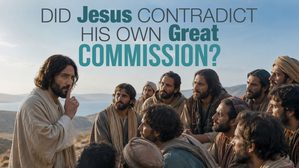
Did Jesus Contradict His Own Great Commission?


Did Jesus Contradict His Own Great Commission?

In all three Synoptic Gospel accounts, we find cases where Jesus instructed various individuals and groups (including apostles and those He had healed) not to tell others about His miracles and divinity, and did not wish for His location to be known (Matthew 8:4; 12:16; 16:20; Mark 1:40-45; 5:43; 7:24,36; 8:26-30; 9:30; Luke 9:21).1 Bible students have wondered why, in light of Jesus’ commissioning for His disciples to tell everyone about Him, such as in the “Great Commission” (Matthew 28:19), He commanded some to conceal information about Him. Responses to this alleged problem have included the following: (1) Mark created the secrecy motif to explain why the historical Jesus never actually declared Himself to be the Messiah.2 (2) Mark stands in contrast to the other Gospel accounts in that he exclusively emphasized secrecy for unknown reasons, which do not apply in the other Gospel accounts and which we must try to elucidate.3 (3) Jesus simply contradicted Himself, because He sometimes instructed His disciples to spread the word about Him.4 (4) Particularly in the early stages of Jesus’ ministry, He instructed people not to tell about Him, because of timing considerations within His ministry.5

Which of these solutions is correct? The first option has been widely rejected on the basis that Mark himself records cases where Jesus made His deity public and allowed others to proclaim it (Mark 5:19-20; 10:47-52; 11:9-10).6 The second option is implausible because all three other Gospel accounts also record occasions where Jesus utilizes secrecy (although John characteristically does so in unique ways).7 If the fourth option is correct, it dissolves the charge of contradiction and makes the third option moot. Therefore, let us consider the merits of the fourth option. 

The Divine Schedule of Jesus’ Life

When we review the biblical data about Jesus’ ministry, we find that the timing of Jesus’ self-revelation was perfect to accomplish His mission, which involved both the teaching of God’s word over a period of time (John 7:10-14; 18:37), and an atoning, sacrificial death at the hands of His enemies after the teaching was complete (Matthew 20:28; 26:28). Jesus’ arrival on Earth itself was at “the right time” according to God’s schedule (Romans 5:6; Galatians 4:4), and He often referred to the divine plan for His life as including an “hour,” or an occasion when it would be the appropriate time for Him to die. This occasion became imminent only after the raising of Lazarus (John 2:4; 7:6,8,30; 8:20; 12:23,27; 13:1; 17:1). Jesus did not leave the hour of His death up to the whims of His enemies. In fact, prior to His hour coming, Jesus slipped away from those who wanted to kill Him (Luke 4:29-30; John 8:59). Later, however, He freely gave Himself into the hands of those who sought His death (John 10:11-18).

Jesus’ Gradual Self-Revelation To the Public

Jesus’ command that people restrain themselves from telling others about Him is neither random nor anomalous, but part of a larger program of concealment and gradual revelation. Consider the following examples:

  • Jesus withdrew from crowds on occasion, even those who wanted to make Him a king (John 6:14-15).8 In fact, when the cleansed leper disobeyed Jesus’ command to remain quiet, the consequent publicity made it “so that Jesus could no longer openly enter the city, but was outside in desert places, and they came to Him from every direction” (Mark 1:45).
  • Jesus did not fully reveal His plan of self-sacrifice even to the apostles from the start (Mark 8:31-32).
  • Jesus’ most frequently used title for Himself was “Son of Man,” which would indicate His divinity only to those familiar with the prophecy of Daniel 7:13-14, but would indicate His humanity to others.
  • Immediately after the Transfiguration, Jesus told the three apostles who witnessed the event not to tell anyone about it until Jesus had been raised from the dead (Matthew 17:9).
  • Jesus taught in parables to conceal literal truth from some in His audience who were unprepared to receive it (Mark 4:11-12,33-34).
  • Jesus knew that some would refuse to believe in Him even if they saw a miracle, let alone heard about His miracles (John 12:39-40; cf. Luke 16:27-31).

Clearly, the passages where Jesus instructed others to keep a secret must be read in light of His overall approach to ministry. Craig S. Keener points out a variety of possible strategic motivations for secrecy, including the public confirmation after the resurrection, the refusal of many to believe, and danger from authorities.9 Undue attention would have short-circuited Jesus’ plans in various ways.

Jesus’ Statement To Annas

Given the occasions when Jesus ordered secrecy, it may seem at first incongruous that at His Jewish trial, He told Annas the high priest, “I spoke openly to the world. I always taught in synagogues and in the temple, where the Jews always meet, and in secret I have said nothing. Why do you ask Me? Ask those who have heard Me what I said to them. Indeed, they know what I said” (John 18:20-21).10 This statement about the open and public nature of Jesus’ teaching is consistent with His requests that various people not publish news about His miracles. Indeed, when people did tell about His miracles, the situation became such that people thronged Him (Mark 1:45). Jesus’ point to the high priest was, as R.C.H. Lenski observed, that “Jesus had no esoteric doctrine. He did not present one kind of doctrine in public for the crowd and another doctrine behind locked doors for the initiate.”11 Furthermore, Jesus’ statement to the high priest came at the end of His ministry, after He and His teaching became so widely influential and well known that the Jewish leadership brought charges against Him (e.g., John 11:47-48).

Conclusion

Eventually, Jesus did instruct all disciples to speak openly about Him and take His message to the world (Matthew 28:19-20; Acts 1:8). Today, with the earthly ministry of Jesus completed, the church established, and the Scriptures revealed and confirmed (Hebrews 2:3), there is no more secret about Jesus (cf. Jeremiah 31:33-34; Hebrews 8:11). Christians today, like those in the first century, go “everywhere preaching the word” (Acts 8:4).

Endnotes

1 Jesus also told demons not to tell about Him, which may be explained on the basis that demons would make unfit messengers (Mark 1:34).

2 See William Wrede (1971), The Messianic Secret, trans. J.C.G. Greig (Cambridge: James Clarke & Co.); cf. Adam Winn (2008), The Purpose of Mark’s Gospel (Tübingen: Mohr Siebeck), p. 10.

3 See Marko Marina (2024), “Messianic Secret: The Mystery Behind Jesus’ Concealed Identity,” Bart Ehrman, https://www.bartehrman.com/messianic-secret/.

4 See Steve Wells (no date), “Did Jesus Have Secret Teachings?” The Skeptic’s Annotated Bible, https://www.skepticsannotatedbible.com/contra/secret.html.

5 See Craig S. Keener (2012), The Historical Jesus of the Gospels (Grand Rapids: Eerdmans), chapter 18.

6 Winn, The Purpose of Mark’s Gospel, p. 10.

7 Craig S. Keener (2003), The Gospel of John: A Commentary (Grand Rapids: Baker Academic), 1:75-78.

8 “While it is no longer popular to suggest that Messianic expectation included a conquering hero who would free the Israelites from the bondage of the Romans, there is much historically and biblically to support this position. As such, declaring oneself Messiah had significant political overtones” (Tim Miller [2016], “The Messianic Secret and the Son of Man,” Detroit Baptist Theological Seminary, https://dbts.edu/2016/01/11/the-messianic-secret-and-the-son-of-man/).

9 Keener, The Gospel of John, 1:76.

10 Cf. Wells, “Did Jesus Have Secret Teachings?”

11 R.C.H. Lenski (1943), The Interpretation of St. John’s Gospel: John 11-21 (Minneapolis: Augsburg), OliveTree Bible Study Software.


A copied sheet of paper

REPRODUCTION & DISCLAIMERS: We are happy to grant permission for this article to be reproduced in part or in its entirety, as long as our stipulations are observed.