


Meet Elijah

Meet Elijah


In a time when most of God’s people had turned away from Him and were worshiping idols, God sent a prophet to remind His people that He was the one and only true God. This prophet’s name was Elijah, and we learn about him starting in 1 Kings 17.
Bearer of Bad News
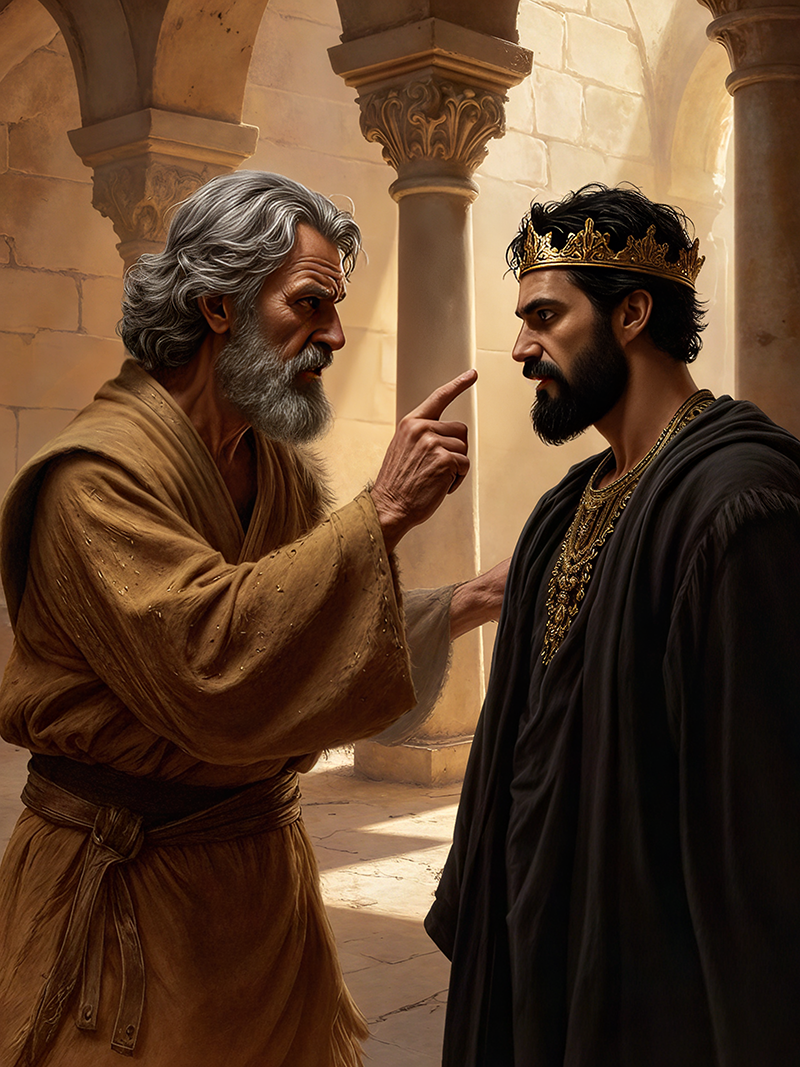
Without any introduction or explanation, Elijah is introduced in 1 Kings 17:1 as “the Tishbite, of the inhabitants of Gilead.” The first thing we see him doing is giving the wicked King Ahab a message from God: “As the LORD God of Israel lives, before whom I stand, there shall not be dew nor rain these years, except at my word.” God then instructed Elijah to leave and “hide by the Brook Cherith,” where God told him that he would “drink from the brook,” and that He had commanded the ravens to feed him there (1 Kings 17:2-4).

Bearer of Better News
After a period of time, the water in the land dried up—including the Brook Cherith, where Elijah had been staying. God then told Elijah to “Arise, go to Zarephath…and dwell there. See, I have commanded a widow there to provide for you” (1 Kings 17:9). But when Elijah arrived, the widow had felt the painful effects of this long drought, and she did not think she had enough food to help him. She told Elijah, “I do not have bread, only a handful of flour in a bin, and a little oil in a jar; and see, I am gathering a couple of sticks that I may go in and prepare it for myself and my son, that we may eat it, and die” (1 Kings 17:12).


Isn’t this a sad situation? The good news is that Elijah had a message from God to deliver to this woman, a much better message than the one he had given Ahab! The Lord’s message was this: “The bin of flour shall not be used up, nor shall the jar of oil run dry, until the day the LORD sends rain on the earth” (1 Kings 17:14). Just as Elijah had delivered “bad news” to Ahab, he delivered “good news” to this poor widow and her son. This is what God’s faithful prophets have always done—they simply delivered the messages that God told them to deliver. Sometimes those messages were difficult to hear, and sometimes they brought joy and comfort.
While Elijah was staying with the widow, her son became sick and died. Elijah prayed to God that the child would come back to life, and God answered his prayer by reviving the child. In so many important ways, God was able to bless this woman and her family through the presence and work of Elijah.

Brave Baal Challenger
The next thing that God told Elijah to do was to “Go, present yourself to Ahab, and I will send rain on the earth” (1 Kings 18:1). At this point, “there was a severe famine in Samaria” (1 Kings 18:2), and King Ahab was “hunting” everywhere for Elijah, since he blamed him for the drought and famine in the land. In truth, it was Ahab’s idolatry and unfaithfulness to God that was the cause of the trouble. Elijah’s conversation with Ahab ended with Elijah challenging the hundreds of false prophets who served Baal and Asherah to meet him on Mount Carmel. Elijah intended to demonstrate the amazing power of the one and only God of heaven! When everyone had arrived at Mount Carmel, Elijah proposed a “contest” to determine whether Baal or the LORD was “God.” The challenge was this:
“I alone am left a prophet of the LORD; but Baal’s prophets are four hundred and fifty men. Therefore let them give us two bulls; and let them choose one bull for themselves, cut it in pieces, and lay it on the wood, but put no fire under it; and I will prepare the other bull, and lay it on the wood, but put no fire under it. Then you call on the name of your gods, and I will call on the name of the LORD; and the God who answers by fire, He is God” (1 Kings 18:22-24a).
Like any “good sport,” Elijah let the prophets of Baal go first. They prepared their altar and their sacrifice, “and called on the name of Baal from morning even till noon, saying, ‘O Baal, hear us!’ But there was no voice; no one answered” (1 Kings 18:26). Elijah showed the ridiculousness of idolatry by mocking them and saying, “Cry aloud, for he is a god; either he is meditating, or he is busy, or he is on a journey, or perhaps he is sleeping and must be awakened” (1 Kings 18:27). The prophets of Baal continued to cry out to their false god “until the time of the offering of the evening sacrifice” (verse 29), even cutting themselves “with knives and lances,” but there was no answer.
Then it was Elijah’s turn. After repairing and preparing the altar of the LORD that had been broken down, he made a trench around the altar, put the wood and the bull on the altar, and said, “Fill four waterpots with water, and pour it on the burnt sacrifice and on the wood” (verse 33). He did this three times and “filled the trench with water” (verse 35). Elijah then said a simple prayer to God, calling on Him to hear him and to turn the hearts of the people back to God. The results were instant: “Then the fire of the LORD fell and consumed the burnt sacrifice, and the wood and the stones and the dust, and it licked up the water that was in the trench” (verse 38). In one of the most “one-sided” contests in human history, God (through Elijah) defeated the prophets of Baal in memorable fashion.

Broken Human Being
Interestingly, immediately after this encouraging victory, Elijah became overwhelmingly discouraged. After the prophets of Baal were defeated, Ahab’s wife, Jezebel, “sent a messenger to Elijah, saying, ‘So let the gods do to me, and more also, if I do not make your life as the life of one of them by tomorrow about this time’” (1 Kings 19:2). When he heard this threat, Elijah “ran for his life,” “went a day’s journey into the wilderness, and came and sat down under a broom tree. And he prayed that he might die” (verse 4). Elijah was a powerful prophet and servant of God, but—like all of us—he was also a human being who struggled with emotions, discouragement, and fear.

How did God respond to Elijah’s request to die? God handled Elijah with gentleness, patience, and understanding. He sent an angel to feed Elijah, He allowed him to rest, and He appeared to him in a meaningful and powerful way to encourage and instruct him in his upcoming work (1 Kings 19:5-18). Elijah was told by God to anoint Elisha to replace him as God’s prophet, but Elijah continued to serve God. Elijah had one more encounter with King Ahab—this time to condemn him and his wife, Jezebel, for murdering a man named Naboth and taking his vineyard for himself (1 Kings 21).
Beloved by God
In 2 Kings 2, we see the amazing account of God taking Elijah into heaven. The Bible says that “suddenly a chariot of fire appeared with horses of fire and separated the two of them [Elijah and Elisha]; and Elijah went up by a whirlwind into heaven” (2 Kings 2:11). Along with Enoch (Genesis 5:24), Elijah was one of only two people who never died. God simply took them home to be with Him.

Elijah lived an amazing life of service to God. It was not “normal,” it was not always easy, and it was sometimes even scary, but he was a faithful servant and prophet who spoke God’s messages plainly and boldly. The New Testament refers to Elijah as an example of someone “with a nature like ours” who “prayed earnestly” (James 5:17). He was not a perfect person—only Jesus could be described in this way—but he shows us the importance of faith, obedience, and fully trusting in the one true God!

REPRODUCTION & DISCLAIMERS: We are happy to grant permission for this article to be reproduced in part or in its entirety, as long as our stipulations are observed.
posted by Believer | 1:30 AM

0 Comments:
Post a Comment
<< Home